Progress in bringing fragile fruit-harvesting robots into the mainstream is being hampered by high cost, low speed and poor adaptability, according to a review by agri-robotics experts.
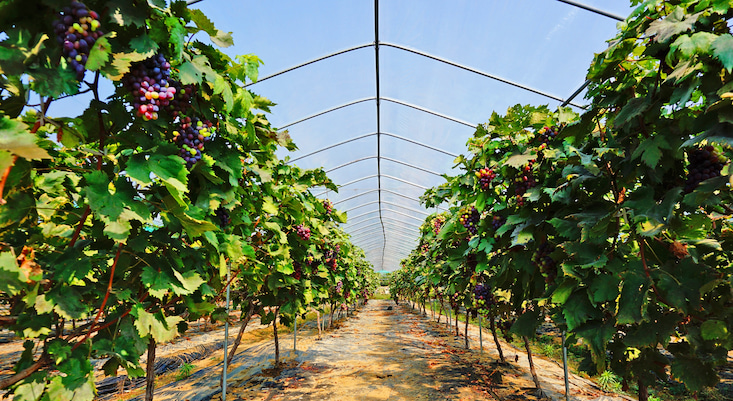
Robotic harvesters are considered an area with great potential, due to growers facing labour shortages and a need for improved efficiency. However, the researchers said that studies to date developing such technologies had viewed harvesting tasks generically. A new focus was needed on how robots handled fragile fruit, which they categorised as skin sensitive (such as tomatoes, cherries and grapes) or tissue sensitive (such as strawberries, peaches and apples).
Fragile fruit harvesting poses new challenges for agricultural robots
They carried out a systematic review of available, suitable technology published in the scientific literature, working to establish what they described as the “technical trajectory” for such fruit picking devices.
Among the potential designs they explored were soft robotic grippers, soft fingers and a gripper using airbags. They also found numerous examples of where nature had inspired the design of potential harvesting tech, from an Asian elephant-trunk inspired fragile fruit grasper to a dynamic gasper based on sea anemone tentacles.
From their analysis, they concluded that while the concepts to date could effectively identify fruit and produce good results in controlled environments, current commercial potential remained limited without a big leap forward.
Robots remain too slow and risk damage to delicate fruit
Technologies tested in research took 10-15 seconds to finish harvesting each fruit, while current manual methods take 2-4 seconds. Harvesting success rates have also tended to be lower than what humans can achieve and have more potential to damage fruit.
A major practical concern is that robots have not proved sufficiently able to navigate the realities of real-world fruit-growing systems, the scientists said. Objects blocking vision technologies installed in robots have proved problematic, and diverse crop varieties and complex plant structures sometimes getting the better of robotics researchers’ best laid plans. Overarching limitations the reviewers identified included a lack of training data and siloed development of fruit-harvesting technologies.
Smarter, more adaptable robots could accelerate automated harvesting
Nevertheless, the scientists remain optimistic about the potential of fragile fruit harvesters – so long as there as those developing technologies shift their focus to specific areas of improvement.
“Fragile harvesting robots are poised for a technological breakthrough. Future research will no longer be confined to single mechanisms or algorithmic optimization, but will involve deep interdisciplinary integration of robotics, agronomy, and cognitive intelligence,” they wrote in Journal of Field Robotics.
To make the shift towards the mainstream, technologies need “embedded intelligence and cognitive reasoning,” they said, in order to properly understand where fruit is in the context of different production settings, as well its fragility and stage of ripeness. Systems also need to become more tailored to agriculture rather than one-size-fits-all – meaning lightweight, flexible and able to adapt to the physical features of fragile fruit. The shortfall in real-world data to train robots and the artificial intelligence models driving them also demands a greater focus on ‘digital twin’ approaches, with trial-and-error in digital environments bringing better performance when harvesting real fruit.
“By developing embodied intelligent systems with cognitive capabilities, it is possible to overcome the conflict between efficiency and fruit damage, ultimately driving the transformation of agricultural harvesting operations toward automation and intelligence,” they added.
Key takeaways
- Fragile fruit robots remain too slow and costly for widespread use.
- Current systems can damage fruit and struggle outside controlled environments.
- Complex crops and limited training data are major robotics challenges.
- Soft grippers and nature-inspired designs could improve fruit harvesting.
- Researchers call for smarter, crop-specific harvesting robots.
Want to read more stories like this? Sign up to our newsletter for bi-weekly updates on sustainable farming and agtech innovation.