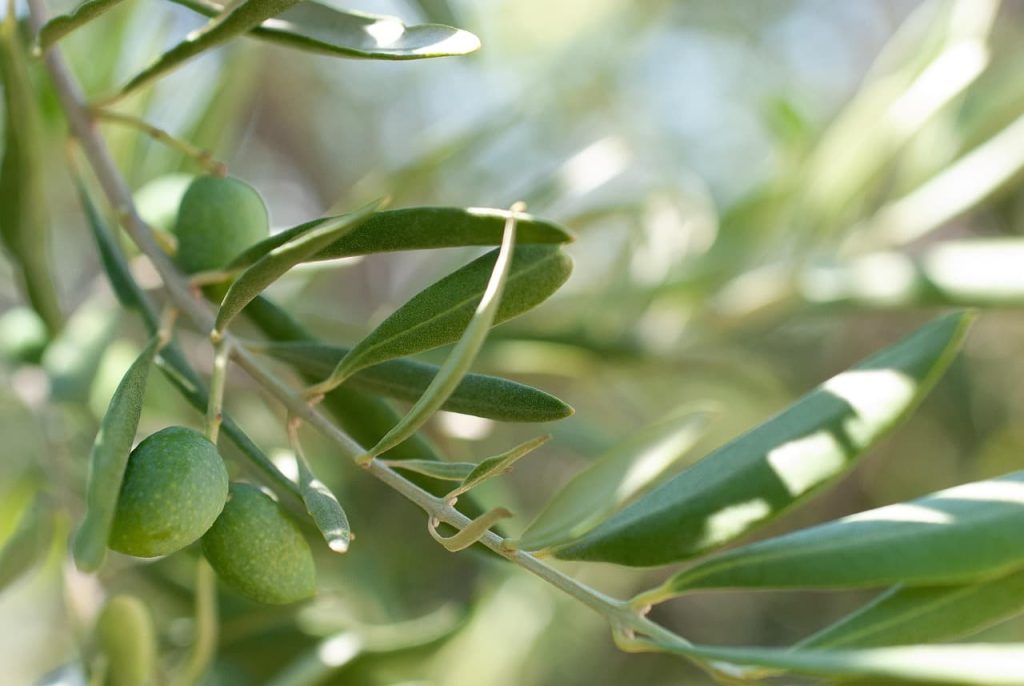
Researchers in Spain have demonstrated that it is possible to inoculate olive trees against verticillium wilt of olive, a major disease caused by Verticillium dahlia, a type of fungus.
The disease is particularly prevalent in olive-growing regions of the Mediterranean country, where it infects up to a quarter of trees and kills thousands every year. This brings significant economic costs through loss of yield and reduced quality olive oil.
Using fungi to fight fungi
The work, by researchers at the universities of Cordoba and Huelva, showed that infecting olive trees with low-virulence types of the fungus brings about enhanced protection against virulent strains.
The study was inspired by observing that some olive varieties naturally recover from serious infections having previously been infected with lower-risk types of the pathogen. To replicate this, the team used a strain of the fungus that does not defoliate trees on nine-month-old, rooted cuttings of the Picual olive type, then subsequently exposed the plants to a defoliating strain. To carry out the inoculation, they slightly damaged some of the plant roots, then dipped them into fungal solutions.
Promising results from early trials
They found that in the treated plants, the disease developed slower, with moderate reactions and no plants dying. On the other hand, control olive plants that did not receive the treatment but were exposed to V. Dahlia had very severe symptoms, and over 83% of the plants died.
“Studies have demonstrated that Verticillium dahliae can persist in asymptomatic plants for varying periods, depending on environmental conditions,” the researchers explained in the journal horticulturae.
“This latent presence of the fungus suggests a dynamic interaction between the pathogen and the host, where the plant may suppress fungal activity without completely eliminating it, potentially contributing to a form of tolerance or partial resistance.”
Timing is critical to protection
The time between infection with the low virulence pathogen and the defoliating version is crucial, they suggested, offering four months between initial and subsequent infection as the ‘sweet spot’ for significant disease reduction. However, they noted that intervals as short as a month also have some effect.
“Early inoculation with the non-defoliating isolate may initiate protective mechanisms in the plant, although a longer interval is necessary for more pronounced disease reduction,” they concluded.
A step toward sustainable disease control
With no commercial-scale solution for verticillium wilt of olive available, and very little research done to date to find biological control options for the disease, the study offers a promising starting point to new methods of supressing V. Dahlia and reducing economic impacts for olive growers.
However, the scientists noted that further work is needed to establish the precise mechanisms behind the improved disease tolerance observed. They also expressed hope that the results could kick-start further work exploring sustainable disease control options.
Key takeaways
- Verticillium wilt infects up to a quarter of Spanish olive trees, killing thousands yearly.
- Inoculating trees with low-virulence fungi boosts resistance to deadly strains.
- Treated plants showed slower disease progression and higher survival rates.
- Timing between infections affects the level of disease protection.
- Study opens new paths toward biological control of Verticillium wilt.
Want to read more stories like this? Sign up to our newsletter for bi-weekly updates on sustainable farming and agtech innovation.