A hundred kilometres north of Sao Paulo, there’s a research team determined to prove that agave cultivation isn’t just for tequila.
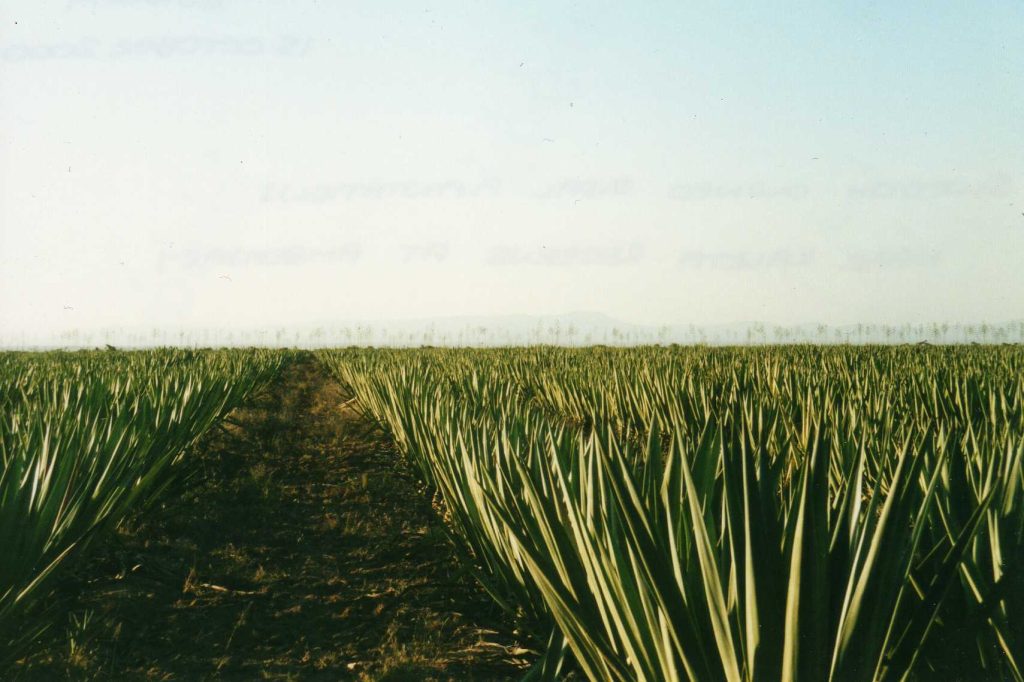
The succulent, which grows in semi-arid regions, is a multi-billion dollar business in Mexico, where it is farmed in selected states for production of the famous alcoholic drink. In Brazil, the industry around agave is focused on the sustainable fibre sisal, but scientists from the State University of Campinas have their eyes on a bigger prize: establishing Brazil as a major player in biofuel derived from the plant.
Why agave appeals for biofuel production
“We began this project around 10 years ago, and we have already demonstrated that we can produce agave in semi-arid regions with a productivity that is very similar to sugarcane. That’s around six thousand litres of ethanol per hectare per year,” said Gonçalo Pereira, a professor at the university.
“The real focus that we normally forget is inequality and to overcome inequality we need jobs. What bioenergy creates is jobs.”
There is clearly something in this bullish perspective, especially when projected production volumes are totted up with Brazil’s over 100 million hectares of semi-arid terrain. The fact that Shell Brazil has supported the laboratory’s work with grant funding also more than hints to considerable economic potential. But to get the country anywhere near becoming a global biofuel player, there are some fundamental problems to address.
The pest and weed challenge
First, agave plantations are prone to weed outbreaks, but the plant itself is susceptible to commercial weedkillers. Feeding damage from pests can also be considerable, with threats coming from both long-established and emerging species.
The most destructive of all the pest cohort is the agave weevil (Scyphophorus acupunctatus), which can cause losses of 90% in some cases, but the armoured scale (Acutaspis agavis) and the maguey red worm (Comadia redtenbacheri) can also cause problems, particularly for the kind of monocultures that would be associated with large-scale cultivation for biofuel.
“Agave based biorefineries are a new basis for prosperity, but in order to convert this efficient future, we need some new tools,” Pereira explained.
Engineering herbicide resistance
Genetics are at the heart of this technological toolbox, and Pereira’s team are on something of a roll. After successfully inserting an enzyme from the soil microbe Agrobacterium tumefaciens to confer glyphosate resistance to Agave sisalana and starting greenhouse cultivation experiments, they have now begun promising preliminary tissue culture experiments to try and produce agave that is genetically modified to express insect killing proteins from the soil bacterium Bacillus thuringiensis (Bt).
A new frontier for Bt crops
Several other globally significant crops have been modified in this way, including cotton, corn and soybeans. While there have been some signs of resistance to the insecticidal pathways of these crops, the area cultivated with Bt crops has grown dramatically in the last two decades.
In the team’s latest paper, lead author Aline Vitória Corim Marim drew on her early experiments and the broader literature on transgenic crops using Bt proteins to make the case for Bt agave as a “new biotechnological frontier.”
From laboratory to commercial fields
So far, the plant scientists have produced modified agave roots in controlled lab work but have yet to prove successful insertion of the insecticidal proteins – which is needed before they can go on to grow whole plants. Regenerating whole plants from cells or tissue is often the most laborious part of plant genetic engineering, but in this case, it has been even more difficult for the team, given there has been so little previous work dedicated to even the idea of transgenic agave.
“What we’re working on is an innovative plant,” said Carolina Rossi De Oliveira, a postdoctoral researcher from the team. “We don’t have previous research about this, this is pioneer work, so it’s difficult to understand the plant material regeneration, elongation, and acclimation. There’s still a long way to go.”
Managing resistance and biodiversity risks
If they produce full plants, there remain some serious potential pitfalls to swerve: becoming another Bt crop that becomes prone to resistance in its target pests, or inadvertently threatening insect biodiversity in what can be unique ecosystems. To address these issues, they are exploring proteins that specifically target pests without adverse wider effects, using step-by-step testing against target and non-target insects. For the longer-term issue of resistance, they propose the use of non-Bt agave refuges alongside Bt crops as a means of preserving potency.
Brazil’s opportunity in semi-arid agriculture
In their efforts, the team are ploughing something of a lone furrow: Mexico has shown little interest in developing genetically engineered agave, and could not cultivate it anyway under current legislation, as transgenic crops are not permitted. This gives Brazil, with no such restrictions, a free run on getting adapted agave to market.
Patience will be needed. De Oliveira estimates that it might take 5-8 years for the herbicide-resistant agave variety to hit the mainstream, and 8-10 years for the Bt variant.
The land use question
Beyond the labs and growing rooms, there are potentially bigger issues at stake. In raising the issue of using Brazil’s semi-arid areas for biofuel production, Pereira hopes to reframe the land use debate in the country. He believes the food-versus-fuel argument is almost irrelevant in these dry and often barren regions, as it is not possible to grow staple crops like corn or wheat there, but at the same time, the terrain has been comparatively ignored next to the focus on competing land use issues in tropical forests.
“We have much more semi-arid areas in the world than tropical forests, but tropical forests are very sexy. We needed to make semi-arid regions sexy areas, so that people pay attention.”
Key takeaways
- Agave could produce ethanol yields comparable to sugarcane in semi-arid regions.
- Brazilian researchers are developing herbicide- and insect-resistant genetically modified agave.
- Agave weevils remain a major obstacle to large-scale cultivation.
- Bt technology could improve pest control while reducing insecticide use.
Want to read more stories like this? Sign up to our newsletter for bi-weekly updates on sustainable farming and agtech innovation.