Cutting fertiliser use could suppress crop pests without reducing yields, according to research that suggests lower-input systems could support integrated pest management (IPM) strategies.
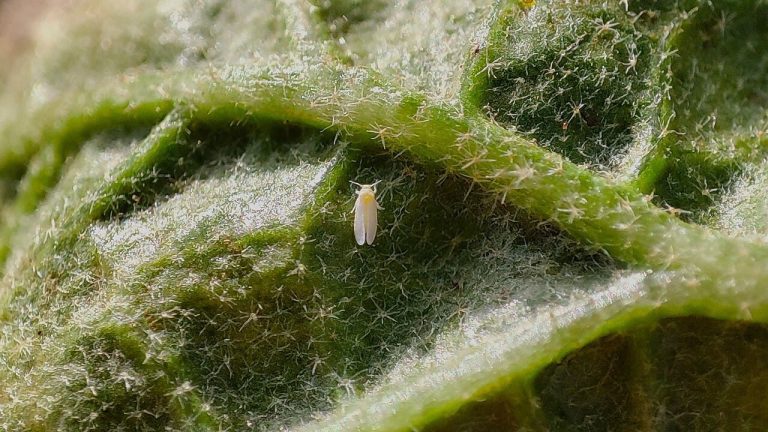
Researchers in France found that cutting fertiliser rates by half cut early aphid populations in greenhouse tomatoes by about 50%, while maintaining fruit yields.
The study, published in Insect Science, examined how different fertiliser approaches impacted interactions between tomato plants, potato aphids and two common-used biological control agents.
Scientists from INRAE, Universite Cote d’Azur, and collaborating institutions compared conventional high fertilization with a medium-rate programme equivalent to about half the nutrient concentration typically applied to greenhouse tomatoes.
Plants were grown under controlled greenhouse conditions and infested with potato aphids (Macrosiphum euphorbiae), before researchers introduced a parasitoid wasp (Aphidius ervi) or the two-spotted ladybird Adalia bipunctata to asses how biological control performance changed under different nutrient programmes.
The researchers found plants receiving lower fertiliser inputs grew slightly less vigorously and contained lower nitrogen levels, but the reduction in fertiliser did not impact final tomato yields. Fruit production was similar regardless of fertilisation level or the type of biological control agent used.
Slower pest development
The scientists also found aphid populations developed more slowly under the reduced fertiliser treatment during the first two-thirds of the experiment. The effect appeared to result from lower plant nitrogen levels, which reduced the nutritional quality of the crop for the aphids
The findings support previous work suggesting that high nitrogen availability can favour sap-feeding insects by improving the nutritional value of host plants.
During the later stages of the trial, when predator and parasitoid populations had become established, the picture became more complex, the researchers said.
The parasitoid wasp produced slightly more mummies and emerging adults under the reduced fertiliser regime, suggesting that lower plant nutrition may favour parasitoid populations. However, the researchers found that the parasitoids appeared to suppress aphids more effectively under high fertilisation conditions despite their lower numbers.
By contrast, ladybird performance remained relatively stable. Predator numbers tended to be higher in the high-fertiliser treatment, but aphid suppression was broadly similar under both nutrient regimes.
The authors said that fertilisation programmes may need to be adjusted depending on the biological control agents being used. While reducing fertiliser inputs can help control pests early and limit pest outbreaks without decreasing the yield of tomato fruits, the resaearchers said that the most appropriate fertilisation strategy may depend on whether growers rely primarily on predators or parasitoids as biological control agents.
Fertiliser management should be considered alongside biological control as part of integrated pest management programmes, they wrote.
The researchers also acknowledged that the results come from a single greenhouse study and that further work across different crops, environments and seasons will be needed before broader recommendations can be made.
Key takeaways
- Reducing fertiliser rates by half lowered early aphid populations in greenhouse tomatoes.
- Tomato fruit yield was not reduced under the medium-fertiliser regime.
- Fertiliser levels affected biological control agents differently, with parasitoids and predators responding in separate ways.
- The findings suggest nutrient management could play a bigger role in integrated pest management.
Want to read more stories like this? Sign up to our newsletter for bi-weekly updates on sustainable farming and agtech innovation.