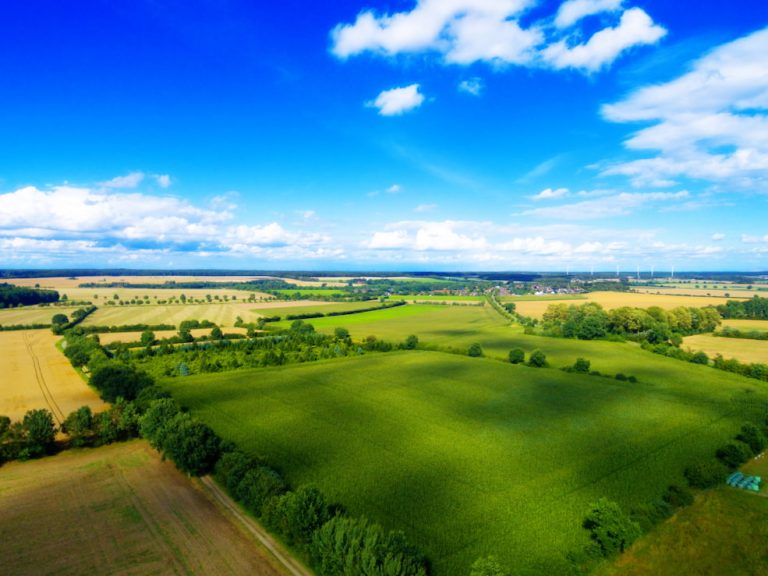
Global assessments of the potential impact of soil carbon sequestration may have been underestimating the potential impact of soil salt content, suggests a study looking at irrigated farmland in an arid region.
Drylands cover around 40% of the global land surface, produce 44% of the world’s crops and provide grazing for half of its livestock – and the stability of carbon stocks in these regions has serious implications for agriculture’s role in climate mitigation.
How does soil salinity effect organic carbon?
Researchers looked at salt concentrations, its ions and soil organic carbon across 106 maize farms with consistent management practices in one such region – northwest China. They sampled in April, before crops were sown.
To measure the soil organic carbon (SOC), which is a key component in soil’s climate change mitigation potential, they used a standard oxidation process, while the team also measured what are known as labile organic carbon – compounds that are easily consumed by soil microbes – and semi-labile organic carbon, which consists of structures like carbohydrates which resist such degradation.
The data analysis of their samples revealed that salt, as well its concentration and specific dominant ions, has a significant effect on how SOC accumulates.
Interested in reading more on this subject? You might like these articles:
Too much salt makes soil carbon less stable
Salt recorded at high levels reduced SOC, as well as recalcitrant organic carbon, which is carbon that resists microbial decomposition and persists for a long time in soil. A general trend was an increase in carbon that easily decomposes, alongside a decrease in the more decomposition-resistant soil fractions with salt levels in the soil. This, said the researchers, suggested that this could reduce the stability of carbon stored in these irrigated soils, leading ultimately to its loss.
Salinity threshold determines carbon gains and losses
However, salt did not always have a negative effect. The scientists found that it contributes to the accrual of SOC in areas where the soil has a low salt content. Their calculations suggested that when salt in soils was below 3.95g kg−1, it had positive contribution to SOC build up and retention, but above that, it starts to decline.
“Our study highlights that salinity alters both SOC content and chemical composition, with high salt reducing stable carbon fractions,” the researchers wrote in the journal Geoderma.
The results have implications for the management of soil carbon on global drylands, but “[they] also emphasize the potential application of dominant salt ions in enhancing the accuracy of SOC sequestration-related prediction models,” the team added.
Key takeaways
- High soil salinity reduces stable carbon storage in dryland soils.
- Low salt levels can enhance soil organic carbon accumulation.
- Critical salinity threshold identified at 3.95 g/kg.
- Salt shifts carbon toward faster decomposition forms.
- Findings could improve global carbon sequestration models.
Want to read more stories like this? Sign up to our newsletter for bi-weekly updates on sustainable farming and agtech innovation.