
A nanotechnology derived from sugar has the potential to make sustainable pest control products more efficient and durable — and the start-up behind it is preparing to move from lab to field.
Farmers across Europe have been facing mounting pressure when it comes managing pests as regulators have halved the number of approved chemicals in the last decade. At the same time, changes in climate and increased resistance are making crops more vulnerable to pests, disease and drought.
With fewer tools available to them, growers are looking for products to replace synthetic chemistry and help them protect yields. In response, analysts expect global sales of biostimulants to climb to almost €6bn (£4.4bn) by 2030, while the RNA interference (RNAi) pesticides market is projected to more than triple in value over the next decade. However, despite their potential, many of these products falter once they reach the field because the active ingredients degrade too quickly.
This is where Bristol-based CDotBio believes its carbon dot technology can make a difference.
Made from organic materials such as sugars or amino acids, carbon dots are ultra-small, spherical nanoparticles that can latch onto other substances to carry them around. Safe for plants and soils, they act like tiny delivery vehicles for active ingredients, latching onto proteins, nutrients, genetic material or biosensors and helping them survive long enough to reach their target.
Success lies in creating a ‘functional shell’ on the carbon dots so that they bind to their cargo with just the right strength. If the binding is too strong, the active ingredient may be neutralised; if it’s too weak, the ingredient won’t be protected in the field.
“We need to find that sweet spot where there’s enough protection, but there’s also a controlled release over time,” says CDotBio Chief Executive, Dr Teo Garcia Millan.
“These types of carriers are also deliberately non-stable, so they don’t persist in the environment. Our evidence shows that they simply biodegrade into different types of sugar metabolites – essentially the same starting ingredients we use to make them.”
From RNAi to biostimulants: broad applications for sugar-based nanoparticles
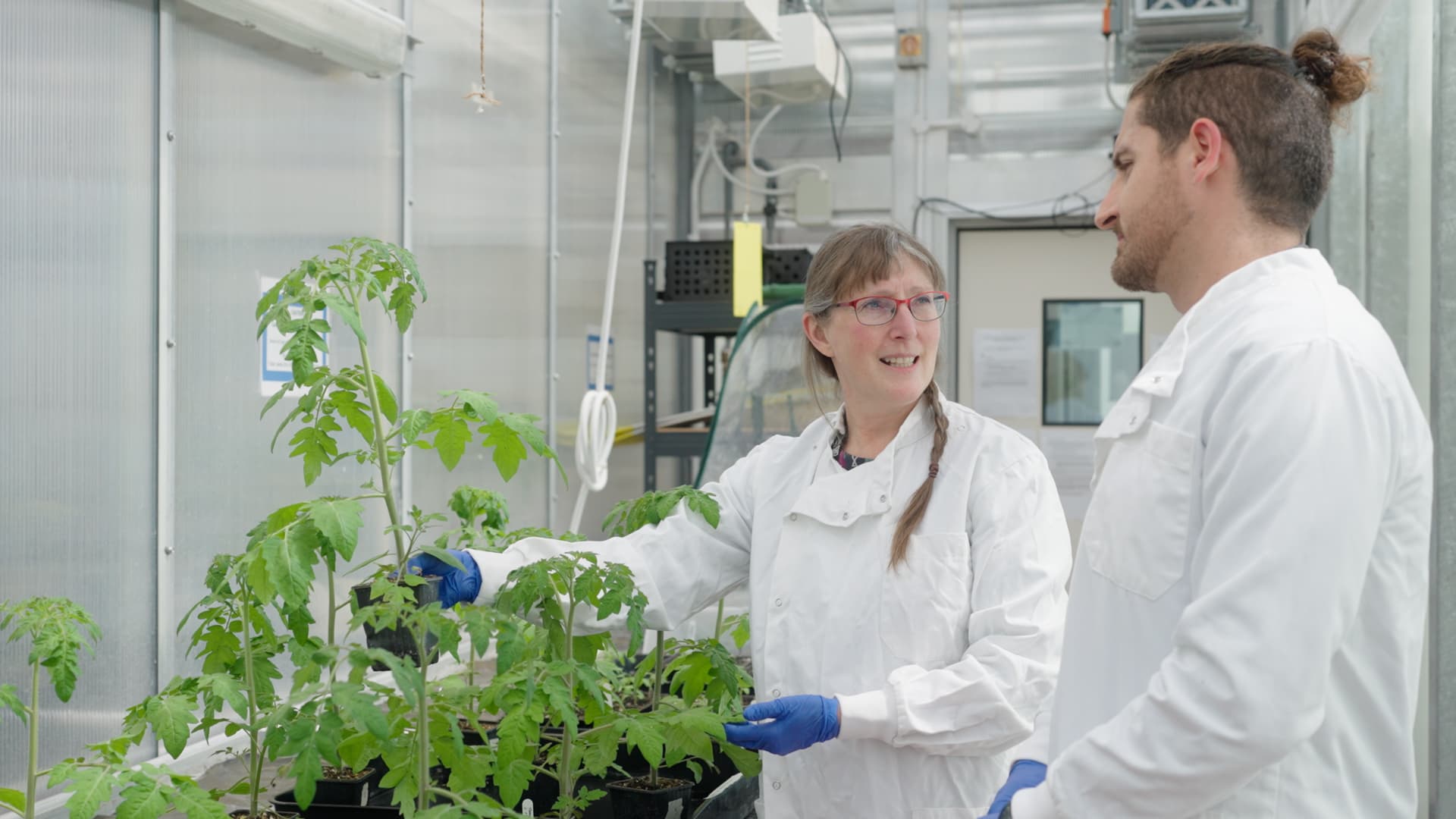
The team, comprising of Garcia Millan, Chief Operating Officer Dr Veronica Greco, and Chief Technical Officer Dr Fran Robson, see wide applications across the spectrum of plant protection. Many companies are searching for ways to improve their products’ field efficacy, reduce application dosages and help products stand up to tighter regulation.
“The reasons companies are interested vary,” says Garcia Millan, who began researching nanodots in printable electronics before applying them to agriculture. ”Some could be driven by compliance, others by economics. Using our carbon dots could reduce costs of their own products or make it more viable to access the market.”,
One of the most promising uses is RNA interference (RNAi), an approach which turns specific genes off by introducing small double-stranded RNA molecules into a cell.
Although RNAi has shown potential, uptake has been slowed by two major issues: delivering RNA effectively into plants, and ensuring it lasts long enough in the environment to work.
“The industry recognises sprayable RNA-based technologies as one of the most promising and yet challenging next generation plant protection products,” says Garcia Millan. “For us, it was a good starting point, and we have demonstrated that we can enable this technology.”
Rothamsted programme helps university spin-out scale agri-tech innovation
To move from proof of concept to field, CDotBio is now working to scale up their operations with the support from SHAKE Climate Change, a funding and support programme led by Rothamsted Research in partnership with renowned research institutions and innovation funders. The company is also in discussion with around 60 firms interested in trials.
Dr Veronica Greco, CDotBio’s COO, who worked with Silicon Valley start-ups as part of her PhD at Stanford University, says the support for the business – a spin-out from the university of Bristol – comes at the perfect time.
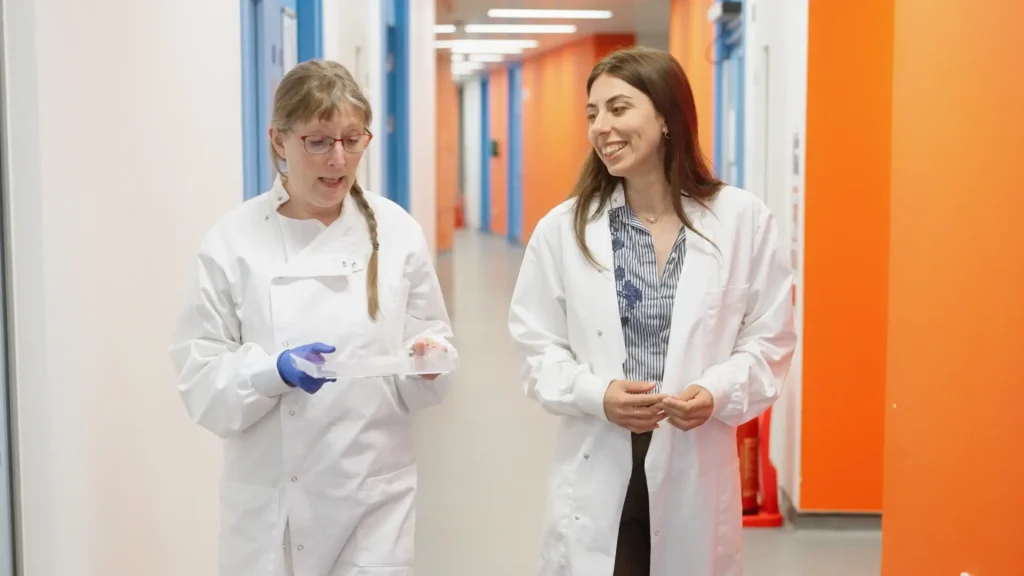
“Regulation of pesticides and herbicides is getting tighter, with the number of approved products for use shrinking by around half of what it was in the past decade. There is a massive pressure to find novel active compounds, so companies are looking for that detail that sets them apart from similar products,” Dr Greco adds.
“We have found that people really want to engage with a technology that can improve uptake, reduce wash offs and bring a clear differentiation point to the regulators.”
From concept to field: trials, regulation, and growth plans
With effective carriers potentially unlocking ecologically friendly pesticides and crops reprogrammed with more robust defences, the implications for food security are significant.
Garcia-Millan believes that linking up with Rothamsted Research and the SHAKE network will help get the team’s deep tech closer to agriculture’s challenges through a culture of continuous research and development.
“We have to move from proven concept to pilot trials, and then beyond field trials to start engaging with regulatory agencies. We need to start derisking, not just from a safety perspective, but also from a from a business perspective, and we trust in SHAKE to help us do that,” he adds.
To find out more about the SHAKE Climate Change support programme, visit shakeclimate.org
Key facts
- A new sugar-based nanotechnology aims to help biological pest-control products last longer and work more reliably in the field.
- The tiny particles act as carriers, protecting fragile active ingredients until they reach the plant or pest.
- They are made from natural materials such as sugars and amino acids and break down safely in soil.
- The technology could improve products like RNA-based sprays and biostimulants, which often degrade too quickly outdoors.
- Bristol start-up CDotBio is developing the system and is now preparing for pilot and field trials.
- The company has support from the SHAKE Climate Change programme, led by Rothamsted Research, and is speaking with around 60 firms about trials.
- Interest is growing as the number of approved pesticides in Europe has fallen by about half in the past decade.
This article is published as part of Farming Future Food’s Industry Insights series, which is supported by sector partners. The FFF editorial team maintains full independence over content.
Want to read more stories like this? Sign up to our newsletter for bi-weekly updates on sustainable farming and agtech innovation.