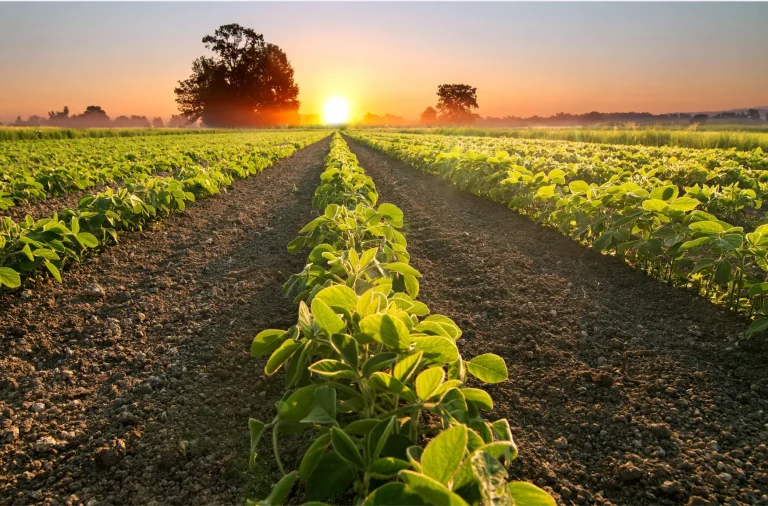
A biodegradable material that transforms UV light into the red light that plants love could help greenhouse growers increase production and cut costs.
High-value crops tend to be grown in protected environments, but returns are very sensitive, and overheads can be steep. Improvements that maximise the productivity of greenhouse and polytunnel environments and the predictability of yields are high on growers’ agendas.
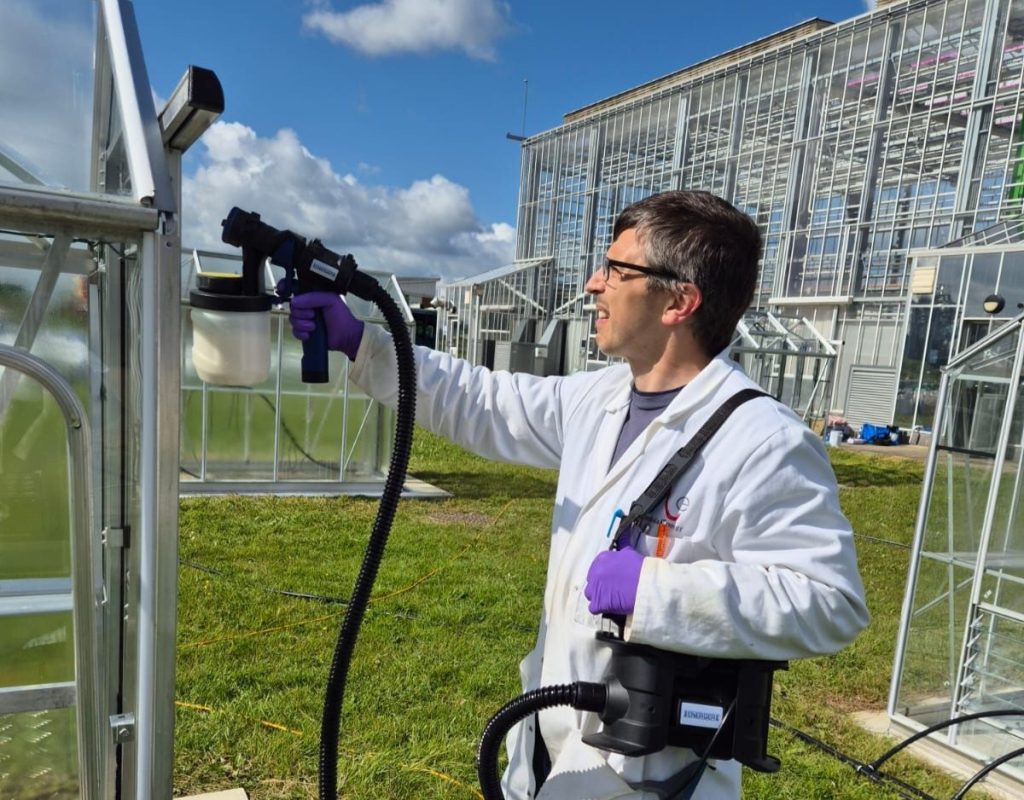
Research has shown that plants grow better under red light, and Cambridge startup Lambda agri has produced an easily-applicable, biodegradable molecule which can be sprayed on greenhouses or incorporated into polytunnel materials, converting UV into red light.
Giving plants more of what they need brings results: the company’s trials at the National Institute for Agricultural Botany (NIAB) have demonstrated 47% and 33% increases in beetroot and rocket yield, respectively.
Switch in focus reaps rewards
Lambda agri, based at Cambridge University’s chemistry department, began with a focus on nanotechnology, seeking to give solar panels the ability to convert damaging UV light to electricity-producing red light.
However, they pivoted to transforming UV for growers using a chemical approach after realising that the solar industry was not yet ready to incorporate their technology. In contrast, farmers and agricultural product companies were actively seeking light-manipulating innovations to improve plant growth and reduce overheads.
“We didn’t have to educate manufacturers of greenhouse coverings, distributors or growers on of why more red light is important for plants in greenhouses. They’ve come across the research and we don’t need to spend time doing a hard sell,” says Lambda agri chief executive Dr Monica Saavedra.
“It’s now about making sure we can deliver the product in a way that best suits growers of protected crops.”
Light shift has multiple benefits
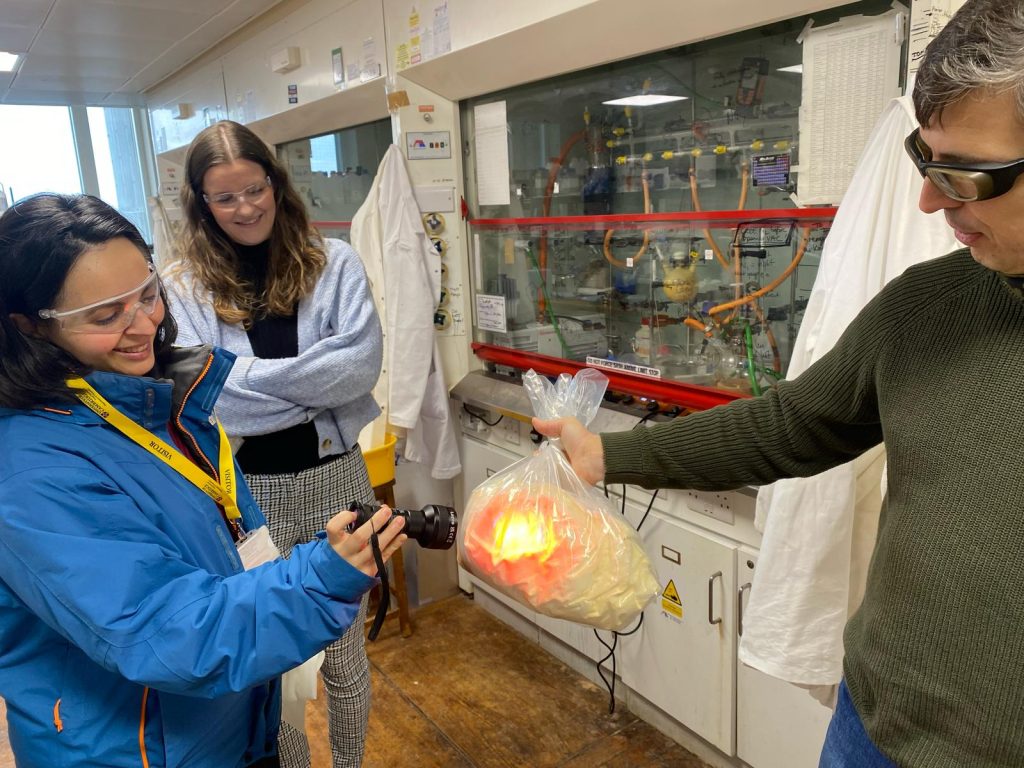
Lambda agri’s biodegradable product offers a novel approach to bringing more light from the red end of the spectrum to a variety of crops grown in protected environments.
LED lighting has been the go-to option for greenhouse growers for some time, but electricity costs can push growers’ bottom lines, and there have been reported issues with light pollution from commercial greenhouses, such as in the Netherlands.
Lambda agri’s goal is to partially displace artificial lighting, says Saavedra, who has previously won an Innovate UK award for women entrepreneurs, Women in Innovation.
What’s more, given the yield improvements that have been underlined in past trials, the optical properties of the materials can be used to predict crop yield increases, she adds.
“In other words, the benefits of different light spectra have been heavily researched over the past couple of decades, so we can make an educated guess at how the plants will turn out.”
Low cost, low impact
Spraying the substance onto greenhouses costs less than 10 pence a metre and increases grower margins by a factor of three, Saavedra notes, making it “economically viable for pretty much every grower in the world.” And aside from the financial benefits, it also delivers sustainability credentials.
Although the compound is biodegradable, it manages to strike a fine balance to meet its purpose. Technically, it fits the category of ‘not readily biodegradable,’ which means that the degradation happens relatively slowly when exposed to water, Saavedra says.
“We are just at the edge of that category, which is the best-case scenario for us, because we are not a forever chemical, but simultaneously, we can last as long as we need to in the field,” she adds.
Widening applications
Now, research and development trials have begun using the additive, working with the largest manufacturers of both polytunnel sheeting and greenhouse coatings in the world. With the active material incorporated in polytunnel sheeting, it will soon be put to the test on the UK’s largest blueberry farm.
Although the product is ready for agricultural applications, it is not limited to growing environments, and there is potential for diversification into solar photovoltaics and medical devices using the same active material.
Help to take things to next level
Lambda agri have been selected as the one of the latest group of budding ag-tech companies to receive support as part of the SHAKE Climate Change programme, from Rothamsted Research, which provides funding and mentoring support.
With an aim to have 30 companies trialling their product by the end of the year, and an ambitious longer-term aim of £63 million in revenues by 2031, it’s a busy time for the company.
Its priorities for the coming months are expanding its commercial team and working with the chemists at Cambridge University to further accelerate the science behind the material as it nears full commercialisation.
“We need more programmes like SHAKE, where they understand the true importance of innovation in agriculture within the context of climate change” adds Saavedra.
“The population is growing and available land for food production is shrinking. At the same time, climate change is a driving force for innovation in greenhouses, as arable land is vulnerable to the extreme weather it causes, and farmers have been negatively affected by this already. We need capital to ensure food security — food is a basic need; we all have to eat.”
To find out more about the SHAKE Climate Change support programme, visit shakeclimate.org
- Biodegradable coating from Cambridge startup Lambda agri converts UV light into red light for plant growth.
- Trials at National Institute of Agricultural Botany showed yield increases up to 47%.
- Technology could reduce greenhouse reliance on costly LED lighting.
- Application costs under 10p per metre, improving grower margins.
- Commercial trials underway with major greenhouse and polytunnel manufacturers.
This article is published as part of Farming Future Food’s Industry Insights series, which is supported by sector partners. The FFF editorial team maintains full independence over content.
Want to read more stories like this? Sign up to our newsletter for bi-weekly updates on sustainable farming and agtech innovation.