Overly high levels of required investment and misalignment with the needs of farmers are causing ag-tech startups to falter, according to an analysis of what went wrong in some high-profile failures.
A wave of high-profile closures
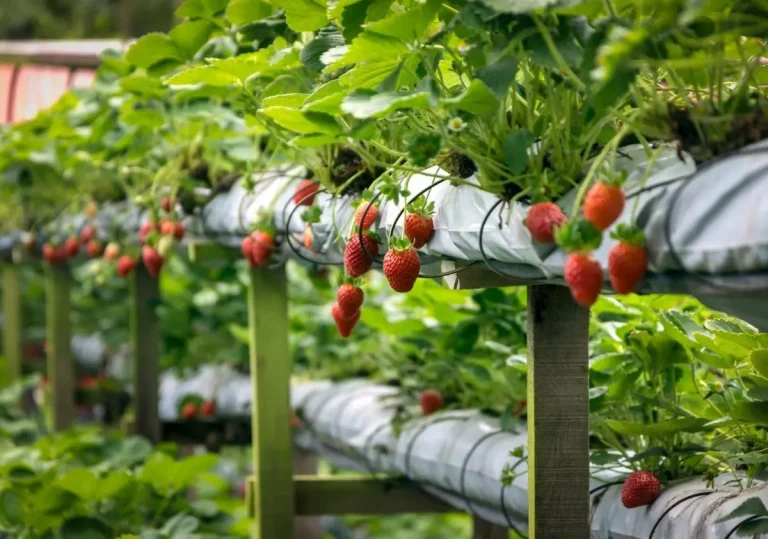
Internationally, some 18 companies offering new technologies in food and farming closed their doors in 2025, including the likes of U.S. farm automation startup FarmWise, UK vertical farming operations Vertical Future and Jones Food Co., and French insect protein outfit Ynsect.
To look for lessons that could be learned by other nascent companies in the sector, Ankit Chandra and Ishani Lal from the University of Nebraska-Lincoln analysed the failures. They found that economics, not scientific feasibility, was the big issue.
“Reasons for shutdowns lumped around the economic burden: capital and operational expenditure and energy costs, mostly in sectors like controlled environment agriculture, insect protein and hardware,” said Chandra, who conceived the idea for the study after students on his course wanted insight into the recent rash of very public shutdowns.
The cost–adoption mismatch
From their observations, they found that 13 of the 18 shutdowns were a result of high operating expenditure and high “adoption friction,” identifying what they called a cost-adoption mismatch effect, where the capital and operational investment needed exceeds famers’ ability to adopt technologies.
Six of the shuttered companies were in vertical farming, while there were three each from sensors and internet of things, digital advisory and alternative proteins. The study also looked at the length of time between founding and closing for the firms, finding that the most capital-intensive ventures tended to persist longer, supported by funding rounds, pilot projects and technical progress, before finding that their products could not be adopted at scale with sufficient speed.
Designing from the farmer backwards
Following creative ideas to the development of new technologies is one component of ag-tech success, but Chandra believes that it is necessary for the sector’s startups to look from the farmer’s perspective first, then design technologies and solutions accordingly.
“Once you have the perspective from farmers, you understand the different elements you should be looking into. This might be looking into reducing their risks, tackling challenges around time sensitivity, labour or profitability,” he said.
“For example, there are macroeconomic problems like high interest rates, and with that, there are thin margins on commodity crops. How we can solve problems like these using right technology is the key.”
Rethinking business models
While stressing that he wanted to see the report as an opportunity to learn, rather than something too negative for the sector, Chandra said that many start-ups have been “too ambitious” and anticipated a future of leaner outfits. This means that the next couple of years will likely be a period of “hard recalibration” for many.
Successful ag-tech business models are likely to be geared towards modular technologies, or technology as a service, he suggested. “For example, rather than just trying to sell a 100k robot to a farmer, if you opt for a leasing model or service model, then you basically drive the adoption.”
Technologies with a short time between conception and creating value for farmers are also likely to be prove more successful, he continued, offering the examples of software layered into tools that farmers already use or biological inputs that don’t require an overhaul of existing farm operations. “Thinking more around business model, rather than technology, is the key,” he added.
A venture capital tension
There were also lessons to learn for those financing ag-tech innovations. The data from the shutdowns suggested that companies received sufficient support for early innovation but less geared towards getting products and services ready for farmers’ adoption.
The report also pointed to a broader problem: an inherent tension between the venture capital model of rapid scaling and the slower and seasonal patterns of agriculture. Blended capital models, public-private consortia and revenue-based models could provide better future options than persisting with business as usual, Chandra said.
Want to read more stories like this? Sign up to our newsletter for bi-weekly updates on sustainable farming and agtech innovation.