Breeding livestock to reduce the effect of a gene that limits muscle growth could help farmers produce more meat from less feed, reducing resource use and greenhouse-gas emissions per kilogram of meat, according to a scientific review.
Researchers found that animals with mutations affecting myostatin – a gene that acts as a natural brake on muscle growth – can produce about 20–30% more muscle and as much as 50% less fat. Evidence from several livestock species also suggests they may convert feed into lean tissue more efficiently.
Led by scientists at the University of Perugia in Italy, the international team of researchers reviewed studies conducted between 1979 and 2025 involving cattle, sheep, goats, pigs, poultry and rabbits.
The review, published in Animal Genetics, considered how naturally occurring myostatin mutations could be exploited through selective breeding, as well as the potential for gene-editing technologies to produce similar effects.
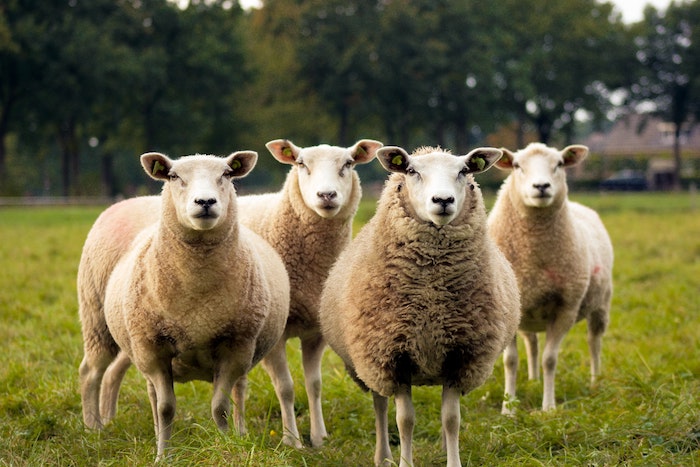
When myostatin function is weakened or disabled, animals can develop more muscle fibres and larger fibres. This produces the “double-muscling” trait found naturally in breeds including Belgian Blue and Piemontese cattle and Texel sheep.
More lean meat from each animal
The review linked myostatin mutations with heavier, leaner carcasses, higher dressing percentages and a greater proportion of high-value cuts.
Belgian Blue cattle can achieve dressing percentages above 60%, according to the paper, while double-muscled cattle may have 30–50% less intramuscular fat than conventional animals.
The researchers also highlighted a naturally occurring myostatin variant in Texel sheep associated with a 2.8% increase in loin depth and a 3.2% increase in loin area.
Similar effects have been produced through marker-assisted selection, crossbreeding and CRISPR/Cas9 gene editing. Gene-edited sheep, goats, pigs, poultry and rabbits have all shown increased muscularity, although results varied between species and genetic lines.
Potential feed-efficiency gains
The authors said the potential sustainability benefits come from animals directing more dietary energy towards producing lean tissue rather than fat.
The studies reviewed linked reduced myostatin activity with better feed efficiency in cattle, sheep and poultry. Myostatin-mutant quail, for example, gained more weight and recorded a lower feed conversion ratio during grow-out than unmodified birds.
The researchers said producing more saleable meat from the same or fewer inputs could reduce feed and water use, as well as greenhouse-gas emissions per kilogram of meat.
However, the review did not quantify those environmental savings across species. The feed-efficiency evidence was also mixed: in pigs, the higher maintenance requirements associated with additional muscle could offset some of the gains.
Production gains bring trade-offs
While there were sustainability benefits, the researchers warned that greater muscle growth could come at a cost to animal health, reproduction and meat quality.
In cattle, strong expression of double muscling has been associated with difficult calvings, and caesarean sections are often needed in affected breeds. Reduced bone mass has also been linked with greater skeletal fragility, making calcium and phosphorus management particularly important.
One pig study found that sows carrying one inactive copy of the myostatin gene reached puberty later and averaged 7.75 piglets per litter, compared with 14.25 among animals without the mutation.
Piglets carrying two inactive copies also had higher rates of congenital abnormalities, including enlarged tongues and umbilical hernias. In poultry, myostatin modifications have been associated with later onset of lay, lower fertility and poorer hatchability.
Meat quality could also be affected. Reduced collagen may improve tenderness, but lower intramuscular fat could compromise flavour and juiciness.
Ultimately, the researchers recommended including myostatin in broader, multi-trait breeding programmes rather than selecting solely for maximum muscle growth.
Animals carrying one inactive copy of the gene could offer a better balance in some species, increasing muscularity and carcass yield while avoiding some problems associated with two inactive copies, they said.
The paper also recommended combining myostatin selection with markers for fertility, structural soundness, fat deposition and meat quality.
Key facts
- Selecting livestock for greater muscle growth could help farmers produce more meat from less feed, reducing resource use and emissions per kilogram.
- The approach focuses on myostatin, a gene that acts as a natural brake on muscle development.
- Animals with mutations that weaken myostatin can produce about 20–30% more muscle and as much as 50% less fat.
- Researchers reviewed evidence from cattle, sheep, goats, pigs, poultry and rabbits, covering studies published between 1979 and 2025.
- They said the potential efficiency gains must be balanced against possible effects on reproduction, animal health and meat quality.
Want to read more stories like this? Sign up to our newsletter for bi-weekly updates on sustainable farming and agtech innovation.